

EnergyJuly 20, 20202 min read
Understanding the Differences Between Delta and Wye Transformer Connections
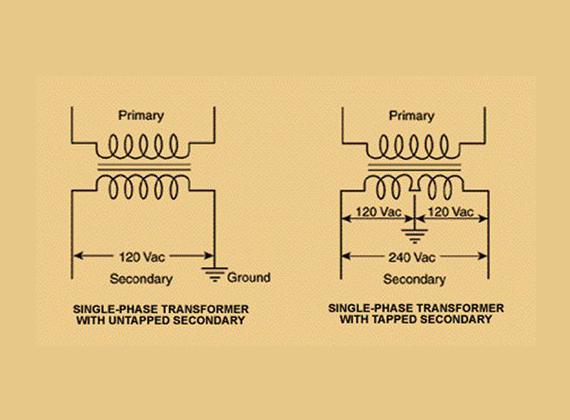
Transformers serve as essential components in electrical distribution systems, facilitating efficient power transmission across extended distances. Two primary configurations exist for connecting transformer windings: Delta (Δ) and Wye (Y, also called Star). Each setup provides distinct electrical properties and use cases. This article examines how Delta and Wye transformer connections differ, including their structural layouts, benefits, limitations, and common uses.
Delta (Δ) Connection
In a Delta connection, the end of each winding is connected to the start of the next winding, forming a closed loop that resembles a triangle or delta. This arrangement creates a three-wire system without a neutral wire.
Wye (Y) Connection
In a Wye connection, one end of each winding is connected together at a common point, forming the neutral, while the other end of each winding forms the phase. This configuration creates a four-wire system that supports both single-phase and three-phase power distribution.
Voltage and Current Characteristics
Delta Connection
Voltage: The line voltage (voltage between two phases) is equal to the phase voltage (voltage across a winding).
Current: The line current measures √3 times the phase current due to phase shifting across the windings.
Wye Connection
Voltage: The line voltage reaches √3 times the phase voltage in this configuration.
Current: The line current is equal to the phase current, simplifying calculations and reducing conductor sizes for the same amount of power.